Digital queuing systems are transforming how citizens access public services by replacing physical lines with data-driven, user-centered processes. In many government offices, long queues, unclear processes, and overcrowded waiting areas have historically discouraged people from accessing essential services. Digital queuing systems address these challenges by organizing demand, providing transparency, and reducing friction across service touchpoints. As expectations shaped by private-sector experiences rise, public institutions are adopting these systems to modernize access and rebuild trust.
The move toward digital queuing systems reflects broader shifts toward smart governance, where technology is used to improve responsiveness, accountability, and inclusivity. By allowing citizens to book appointments, receive real-time updates, and manage visits remotely, digital queues reduce uncertainty and improve the overall experience. This approach directly tackles excessive wait times while improving service efficiency for both users and administrators.
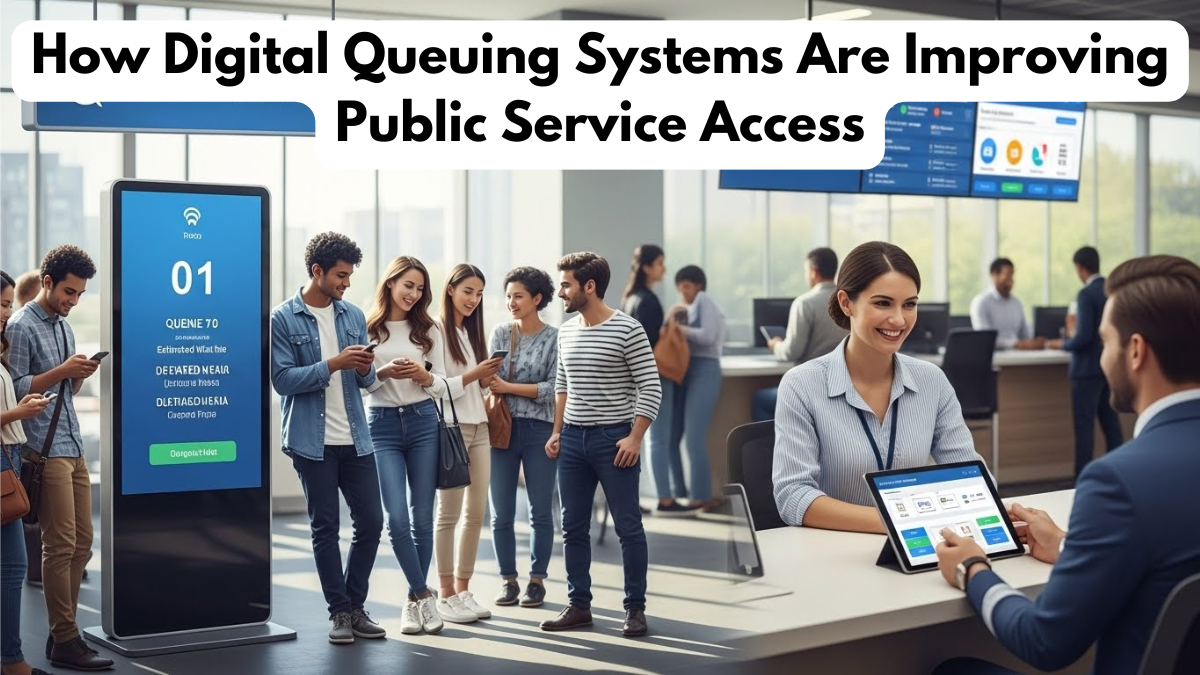
Reducing wait times through data-driven scheduling
One of the most immediate benefits of digital queuing systems is their impact on wait times. Traditional first-come, first-served models often create bottlenecks due to uneven demand and limited staffing visibility. Digital systems analyze historical data, predict peak periods, and distribute appointments more evenly throughout the day. This reduces crowding and shortens waits without requiring additional resources.
By providing real-time notifications and estimated service windows, digital queuing systems empower citizens to plan their visits more effectively. People no longer need to arrive early and wait indefinitely, which disproportionately affects workers, caregivers, and vulnerable populations. As wait times become more predictable, satisfaction increases and missed appointments decrease, reinforcing service efficiency across public agencies.
Smart governance and transparent service delivery
Smart governance emphasizes transparency, participation, and evidence-based decision-making. Digital queuing systems support this model by making service processes visible and measurable. Administrators can monitor demand patterns, identify service gaps, and adjust staffing in response to real-time conditions. This transparency strengthens accountability and supports continuous improvement.
For citizens, smart governance enabled by digital queues means clearer expectations and fairer access. Time-stamped tickets and digital records reduce perceptions of favoritism or inefficiency. When people can see how the system works, trust in public institutions improves. In this way, digital queuing systems become tools not just for operations, but for democratic legitimacy.
Improving service efficiency across agencies
Enhancing service efficiency is a core objective of digital queuing systems. Automation reduces manual tasks such as paper ticketing, crowd management, and repetitive inquiries. Staff can focus on delivering services rather than managing lines, improving throughput and morale. Integrated systems also allow agencies to coordinate across departments, reducing duplication and errors.
By streamlining workflows, digital queuing systems help agencies serve more people with the same or fewer resources. Performance metrics derived from queue data enable targeted improvements, such as reallocating staff during peak periods or redesigning service steps. As service efficiency improves, agencies can expand access without compromising quality.
Key operational advantages of digital queuing systems include:
- Shorter and more predictable wait times
- Better resource allocation for service efficiency
- Data-driven insights supporting smart governance
- Reduced congestion and improved safety
- Higher citizen satisfaction and trust
The table below compares traditional queuing with digital queuing systems in public services:
| Aspect | Traditional Queues | Digital Queuing Systems |
|---|---|---|
| Wait times | Long and uncertain | Shorter and predictable |
| Transparency | Low | High |
| Service efficiency | Manual and reactive | Automated and proactive |
| Governance model | Process-focused | Smart governance |
| User experience | Frustrating | User-centered |
Accessibility, inclusion, and equity considerations
While digital queuing systems offer significant benefits, equitable access must be carefully addressed. Not all citizens have reliable internet access or digital literacy. To support inclusive smart governance, agencies often provide hybrid models that combine digital queues with assisted kiosks or staffed help desks. This ensures that technology enhances access rather than creating new barriers.
When designed inclusively, digital queuing systems can improve equity by prioritizing vulnerable users, offering language support, and accommodating accessibility needs. Reduced wait times particularly benefit those who cannot afford to take extended time off work. Inclusive design strengthens service efficiency while aligning with public values of fairness and access.
Security, privacy, and trust
The adoption of digital queuing systems also raises considerations around data protection and privacy. Collecting appointment details and service data requires clear safeguards to maintain public trust. Agencies must communicate how data is used, stored, and protected, aligning with principles of smart governance.
Strong privacy practices enhance confidence in digital services and encourage adoption. When citizens trust that systems are secure, participation increases, leading to better demand forecasting and improved service efficiency. Transparency around data practices complements transparency in service delivery, reinforcing the benefits of digital queuing systems.
Scaling and future public service models
As cities and governments expand digital infrastructure, digital queuing systems are becoming foundational components of modern public service delivery. Integration with mobile apps, identity systems, and analytics platforms enables seamless experiences across services such as licensing, healthcare, and social support. These integrations further reduce wait times and support coordinated smart governance strategies.
Looking ahead, predictive analytics and AI-driven routing may further optimize service efficiency by anticipating demand and personalizing service pathways. As these capabilities mature, digital queuing systems will help public institutions transition from reactive service models to proactive, citizen-centered governance.
Conclusion
In conclusion, digital queuing systems are improving public service access by reducing wait times, enhancing service efficiency, and enabling smart governance. By replacing physical lines with transparent, data-driven processes, these systems modernize how citizens interact with public institutions. When implemented inclusively and securely, digital queuing systems strengthen trust, expand access, and set the foundation for more responsive and equitable public services.
FAQs
What are digital queuing systems?
Digital queuing systems manage service demand using appointments, virtual tickets, and real-time updates instead of physical lines.
How do digital queuing systems reduce wait times?
They use data-driven scheduling and real-time notifications to make wait times shorter and more predictable.
Why are digital queuing systems part of smart governance?
They increase transparency, accountability, and data-informed decision-making, supporting smart governance.
Do digital queuing systems improve service efficiency?
Yes, they automate queue management and optimize staffing, boosting service efficiency.
Are digital queuing systems accessible to everyone?
When designed with hybrid options and assistance, they can support inclusive access while reducing wait times.
Click here to know more.