Floating architecture is gaining global attention as coastal and riverfront cities confront the accelerating realities of climate change. With more frequent flooding, land subsidence, and unpredictable weather patterns, traditional urban planning approaches are proving insufficient. Floating architecture offers an adaptive alternative by allowing buildings and infrastructure to rise and fall with changing water levels rather than resisting them. This approach directly responds to sea level rise, which is placing increasing pressure on densely populated urban areas.
As cities search for long-term solutions, floating architecture is no longer viewed as experimental or futuristic. Instead, it is becoming a practical strategy to protect housing, public services, and economic activity. By rethinking design principles and integrating water as a permanent element of the built environment, floating architecture supports a more flexible and sustainable vision of urban resilience.
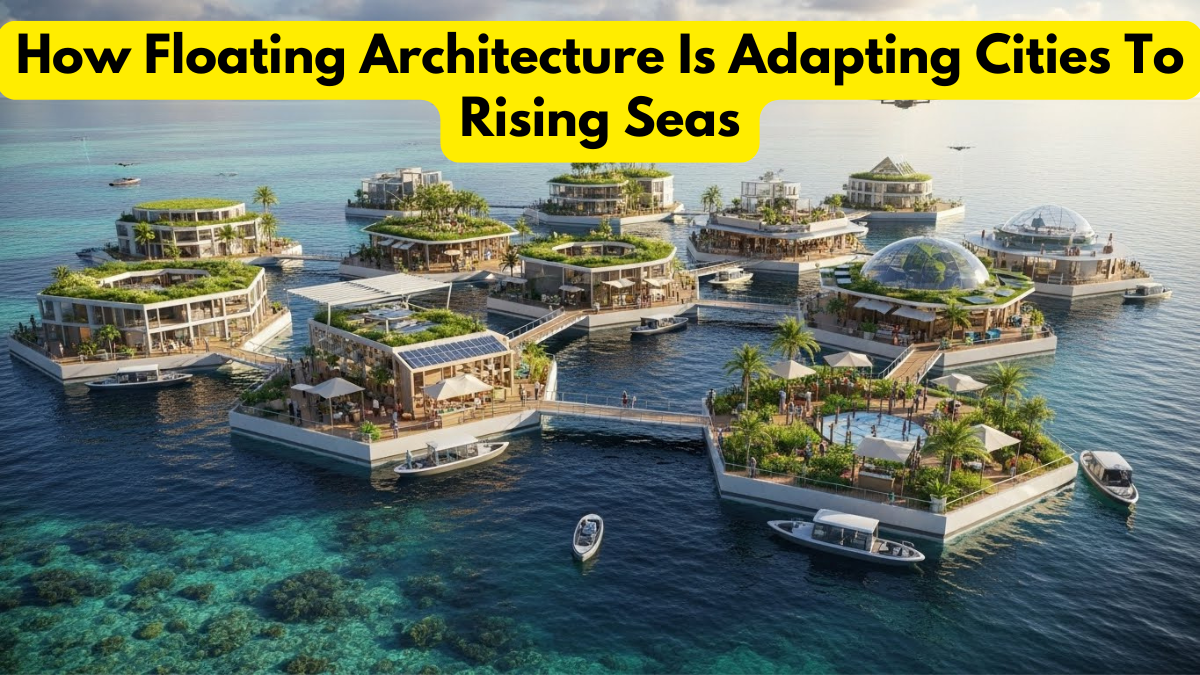
Sea level rise and the limits of traditional urban planning
The accelerating pace of sea level rise has exposed the limitations of conventional flood defenses such as seawalls, levees, and land reclamation. While these measures offer temporary protection, they often require continuous upgrades and can disrupt natural ecosystems. In many coastal cities, hard barriers simply shift flooding risks elsewhere rather than eliminating them. Floating architecture addresses this challenge by working with water dynamics instead of attempting to control them.
By adapting directly to sea level rise, floating architecture reduces long-term vulnerability. Buildings designed to float remain functional during floods, minimizing displacement and economic loss. This adaptability strengthens urban resilience by ensuring continuity of essential services such as housing, healthcare, and transportation. As climate projections become more severe, cities are increasingly considering floating solutions as part of comprehensive adaptation strategies.
Design innovation behind floating architecture
At the core of floating architecture is innovative design that balances stability, safety, and livability. Structures are typically built on buoyant foundations made from concrete pontoons, steel platforms, or advanced composite materials. These foundations are anchored to prevent drift while allowing vertical movement with water levels. This specialized design ensures that floating buildings remain secure even during extreme weather events.
Beyond structural engineering, design considerations also include energy efficiency, waste management, and integration with existing urban fabric. Many floating architecture projects incorporate renewable energy systems, rainwater harvesting, and modular construction techniques. By combining sustainability with adaptability, floating architecture demonstrates how climate-responsive design can enhance both functionality and quality of life.
Urban resilience through adaptable infrastructure
One of the strongest advantages of floating architecture is its contribution to urban resilience. Cities that incorporate floating structures can better absorb shocks from flooding and storms without widespread disruption. Schools, emergency centers, and residential complexes built using floating architecture can remain operational even when surrounding areas are inundated.
This adaptability supports long-term urban resilience by reducing recovery costs and downtime after climate-related events. Instead of rebuilding damaged infrastructure repeatedly, cities can invest in systems that adjust automatically to environmental changes. As sea level rise continues to challenge coastal development, floating architecture offers a proactive path toward resilient urban growth.
Key benefits of floating architecture include:
- Direct adaptation to sea level rise
- Enhanced urban resilience during floods
- Flexible and climate-responsive design
- Reduced long-term infrastructure damage
- Integration with sustainable technologies
The table below compares floating architecture with traditional coastal construction:
| Aspect | Traditional Construction | Floating architecture |
|---|---|---|
| Response to flooding | Vulnerable | Adaptive |
| Sea level rise impact | High risk | Built-in flexibility |
| Urban resilience | Reactive | Proactive |
| Design approach | Land-based | Water-integrated |
| Long-term costs | Repeated repairs | Lower lifecycle costs |
Social, economic, and regulatory considerations
While floating architecture offers clear advantages, its adoption also involves social and regulatory challenges. Building codes, zoning laws, and insurance frameworks in many regions are not yet designed to accommodate floating structures. Updating these systems is essential for wider implementation. However, as pilot projects demonstrate success, regulatory environments are gradually evolving to support this new form of design.
From an economic perspective, floating architecture can stimulate innovation and investment in climate-adaptive construction. New industries related to materials, engineering, and maintenance emerge as cities embrace water-based development. These economic benefits further strengthen urban resilience, making floating architecture not only a defensive strategy against sea level rise but also a catalyst for sustainable growth.
Conclusion
In conclusion, floating architecture is adapting cities to rising seas by reimagining how urban environments interact with water. By addressing sea level rise directly, enhancing urban resilience, and advancing climate-responsive design, floating architecture offers a viable pathway for cities facing an uncertain environmental future. As climate risks intensify, embracing adaptable solutions like floating architecture may prove essential for protecting communities, economies, and the continuity of urban life.
FAQs
What is floating architecture?
Floating architecture refers to buildings and infrastructure designed to float on water while remaining securely anchored.
How does floating architecture address sea level rise?
It adapts to sea level rise by allowing structures to rise and fall with changing water levels instead of being permanently fixed.
Why is floating architecture important for urban resilience?
It enhances urban resilience by keeping buildings functional during floods and reducing long-term damage.
Are floating buildings safe during extreme weather?
Yes, when properly engineered, floating architecture uses specialized design features to ensure stability and safety.
Can floating architecture be used in existing cities?
Yes, floating architecture can be integrated into existing urban areas, especially along waterfronts, with supportive regulations.
Click here to know more.